
Oil Booms
What Are Oil Spill Containment Booms?
Oil spill containment booms are floating marine barrier systems designed to contain, control, and recover oil spills on water surfaces. They are deployed in oceans, ports, rivers, harbors, and industrial facilities to prevent the spread of oil and other floating pollutants, minimizing environmental damage and enabling efficient cleanup operations.
Oil booms typically consist of a floating freeboard section, a flexible skirt, internal flotation chambers, and a ballast system, which together ensure stability on water and effective containment under varying wave and current conditions.
These systems are a critical component of oil spill response and marine pollution control strategies, widely used by ports, oil terminals, refineries, offshore platforms, and environmental agencies.
Key Functions of Oil Spill Booms
Containment of floating oil and hydrocarbons
Prevention of oil spread in marine and inland waters
Protection of shorelines, ports, and sensitive ecosystems
Guidance of oil toward recovery equipment
Emergency spill response control
Industrial and offshore pollution management
Key Applications of WavePlus Geo Tubes
River & Inland Water Protection
Applied in rivers, lakes, and canals to control oil pollution movement and protect downstream ecosystems and water intake points.
Ports, Harbors & Marinas
Installed in ports and harbor protection systems to prevent oil contamination from ships, bunkering operations, and port machinery activities.
Offshore Oil & Gas Operations
Used around offshore platforms and drilling rigs to contain operational leaks, drilling discharge, and accidental hydrocarbon releases.
Oil Refineries & Storage Terminals
Deployed in refinery and fuel storage facilities to protect surrounding water bodies from contamination during loading, unloading, and transfer operations.
Oil Spill Emergency Response
Used as the primary first-line defense in oil spill response operations, helping to contain and control oil spread on water surfaces during accidental spills.
Ship-to-Ship Transfer Operations
Used during marine fuel transfer and bunkering operations to contain accidental spills and minimize environmental risk.
WavePlus Oil Booms Projects
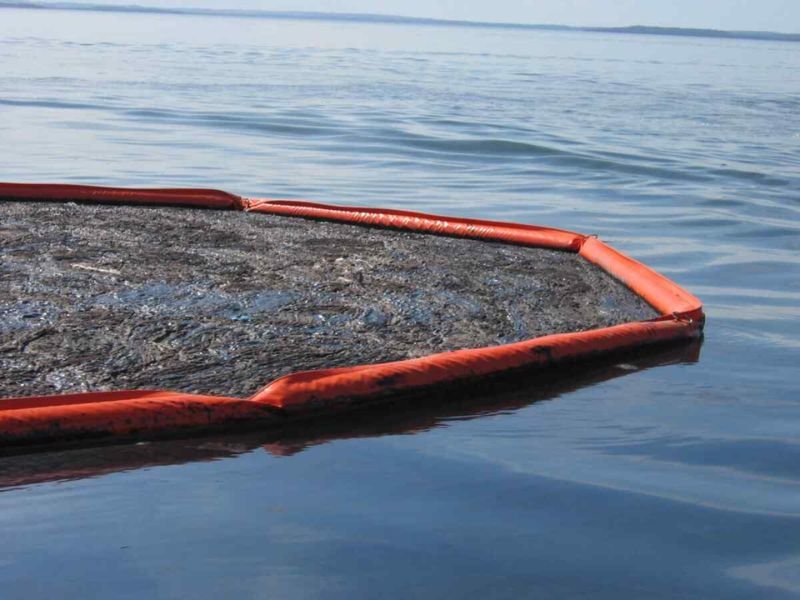
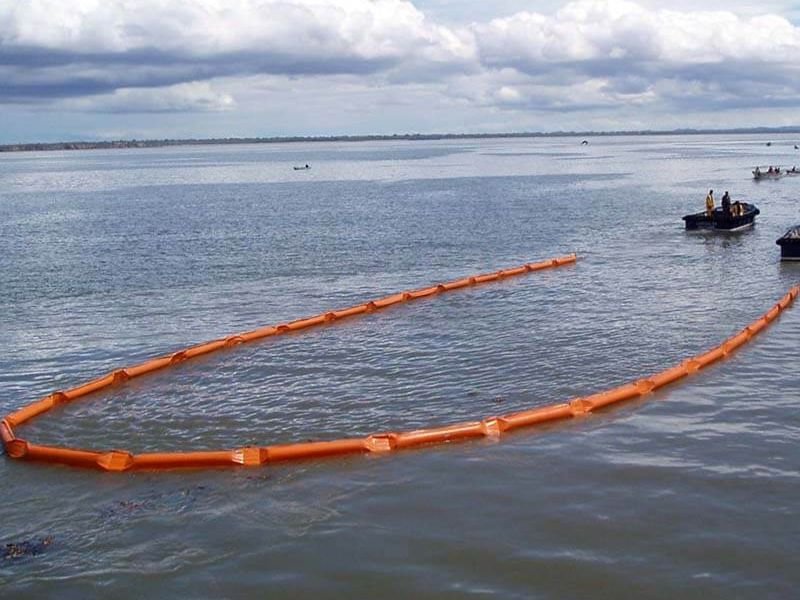
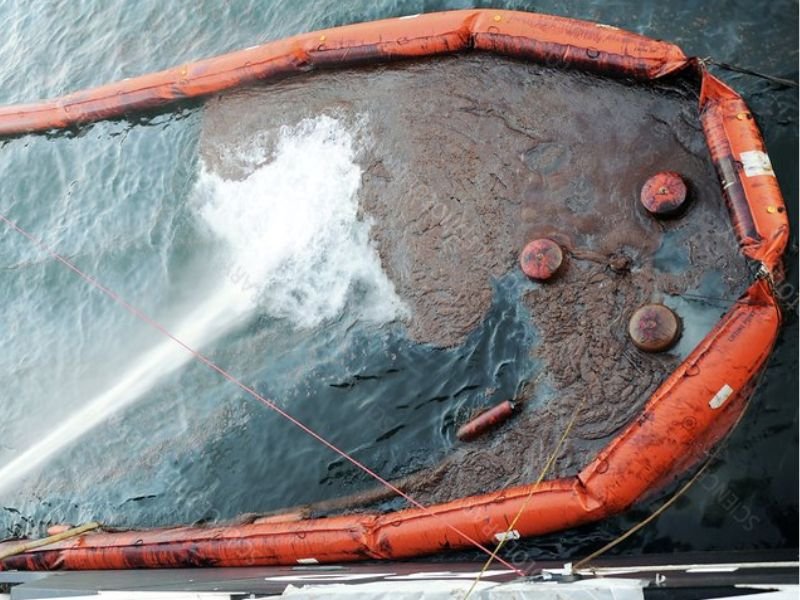
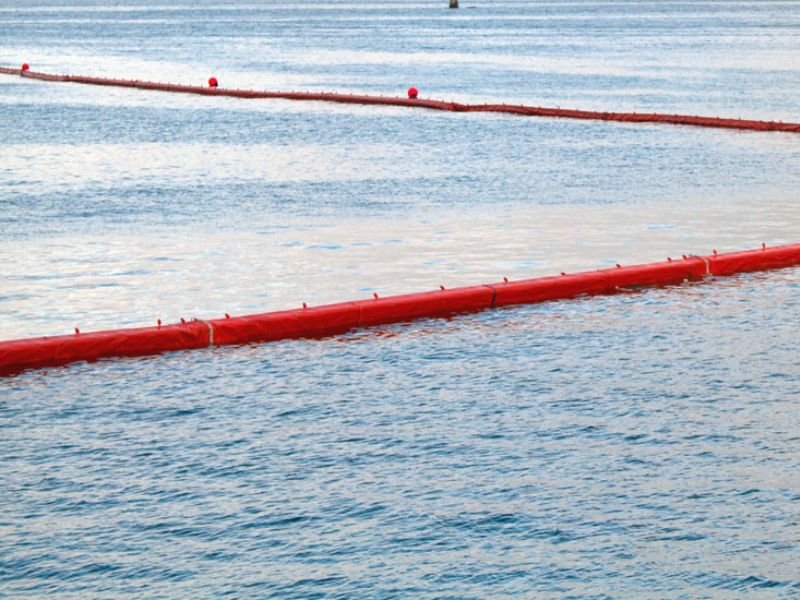
WavePlus Oil Spill Containment Boom Videos
Frequently Asked Questions about WavePlus Oil Booms
What is the difference between PVC and TPU Oil Booms?
PVC oil booms are cost-effective and suitable for short-term or emergency spill response, while TPU (Thermoplastic Polyurethane) oil booms offer higher durability, better abrasion resistance, and longer service life, making them ideal for long-term offshore and industrial applications.
What factors determine oil boom containment efficiency?
Containment efficiency depends on boom freeboard, skirt depth, ballast weight, wave conditions, current velocity, and proper deployment configuration. Higher freeboard and deeper skirts improve performance in rough water conditions.
How does wave height affect oil boom performance?
As wave height increases, oil boom stability decreases due to increased overtopping and tension stress. For high wave environments, reinforced booms with tension members and high flotation stability are required to maintain containment effectiveness.
What is the importance of tensile strength in oil booms?
Tensile strength is critical for maintaining structural integrity under current forces, wind load, and towing stresses. Higher tensile strength reduces the risk of boom failure during deployment in offshore and industrial spill response operations.
How do oil booms prevent oil leakage under current flow?
Oil booms act as floating barriers that contain oil on the water surface. Proper skirt depth and ballast weight reduce sub-surface flow, while overlap connections prevent leakage between boom sections under current movement.
What is the difference between permanent and temporary oil booms?
Permanent oil booms are designed for long-term installation in ports, refineries, and terminals, using high-durability materials and anchoring systems. Temporary booms are lightweight and designed for rapid deployment during emergency spill response.
What environmental conditions affect oil boom lifespan?
Oil boom lifespan is influenced by UV exposure, salinity, chemical exposure, temperature variations, wave action, and mechanical wear. TPU-based booms generally provide better resistance in harsh marine environments.
How is oil boom anchoring system designed?
Anchoring systems are designed based on current velocity, water depth, and deployment layout. Proper anchoring ensures boom stability and prevents drift or failure under dynamic marine conditions.
Can oil booms be used in open sea conditions?
Yes, but only specialized offshore oil booms designed with high tensile strength, deep skirts, and reinforced flotation chambers are suitable for open sea deployment where wave and current forces are significant.
Related Articles
- WavePlus Oil Booms: Effective Solutions for Oil Spill Containment and Marine Protection.
- EPS Floater Oil Booms with ASTM Connectors for Effective Oil Spill Response.
- Numerical Study of an Oil Spill Containment Boom by the Finite-Element Method.
- WIT Transactions on Ecology and the Environment: Volume 95
- WavePlus Oil Booms for Marine Oil Spill Containment.
- Could Oil Booms Have Reduced the Impact of the X-Press Pearl Disaster?
Request a Quote
Ready to Work Together? Build a project with us!